> Chapter 1 - Introduction C# and .NET 6 - 1 (LTS,CLS,CTS,BCL)
AUTHOR: PID-1
TIMESTAMP: 2026-05-31 21:42:05
Microsoft's .NET platform and the C# programming language were formally introduced circa 2002. (2000 : .NET has been announced and 2002 .NET and C# officialy has been released.). The .NET platform enables a large number of programming languages including (C#, VB.NET, and F#) to interact with each other. In 2016, Microsoft officialy launched .NET core. Like .NET, .NET core allows languages to interop with each other. More importantly, this new framework is no longer limited to running on Windows OS but can also run on iOS, and Linux, and be developed on MacOS and Linux.
• Microsoft launched C# 10 and .NET 6 on November 8,2021. C# 10 is tied to a specific version of the framework and will run only on .NET 6 and above.
Understanding the .NET Support Lifecycle
LTS (Long-Term Support) releases are major releases that will be supported for an extended period of time. They will only receive critical and/or nonbreaking fixes throughout their life span. Prior to end-of-life LTS versions will be changed to the designation of maintanence. LTS releases with .NET will be supported for the following time frames, whichever is longer. • 3 years after initial release • One year of maintenance support after subsequent LTS release. Microsoft has decided to name Short-Term support releases as Current, which are interval releases between the major LTS releases. They are supported for 6 months after a subsequent Current or LTS release. https://dotnet.microsoft.com/platform/support-policy/dotnet-corePreviewing the Building Blocks of the .NET Platform
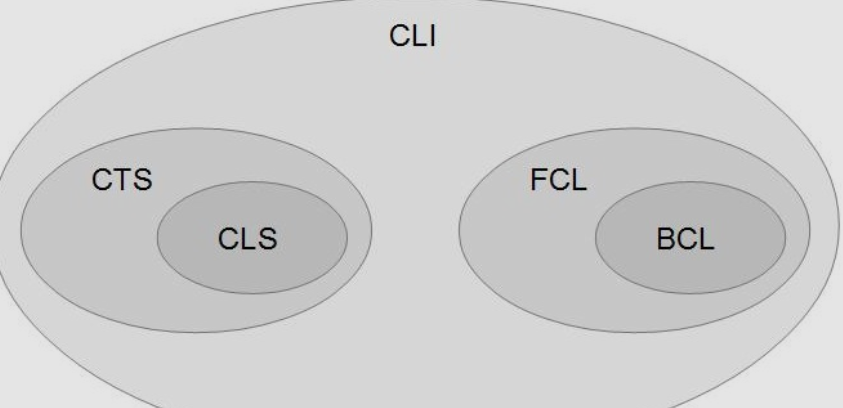
.NET can be understood as a runtime environment and a comprehensive base class library. The runtime layer contains the set of minimal implementations that are tied specifically to a platform (Windows, iOS, Linux) and architecture (x86,x64,ARM), as well as all of the base types for .NET. Another building block of the .NET Platform is CTS (Common Type System). The CTS specification fully describes all possible data types and all programming constructs supported by the runtime, specifies how these entries can interact with each other, and details how they are represented in the .NET metadata format. For example; VB.NET Code
Dim number As Integer = 42
C#
int number = 42;
public class Car
{
    // Genel yöntemler büyük/küçük harf duyarlı olmamalıdır
    public void RunCar() { }

    // This can not be appropriate for CLS
    // public void arabayicalistir() { }

    // Yalnızca CLS uyumlu türleri kullanın
    public int Sum(int a, int b)
    {
        return a + b;
    }

    // This can not be appropriate for CLS  because uint is not assiociated with CLS
    // public uint Extract(uint a, uint b)
    // {
    //     return a - b;
    // }
}
The Role of the Base Class Libraries
The .NET Platform also provides a set of base class libraries (BCLs) that are available to all .NET programming languages. Not only does this base class library encapsulate various primitives such as threads, file input/output (I/O), graphical rendering systems, and interaction with various external hardware devices, but it also provides support for a number of services required by most real-world applications. The base class libraries define types that can be used to build any type of software application and for components of the application to interact with each other.